
Having guided travelers through the chaotic, vibrant, and deeply historical streets of the Old Quarter since well before 2010, I have witnessed this city transform. Yet, amidst the rapid modernization, one thing remains the steady, beating heart of the capital: Hanoi tea culture.
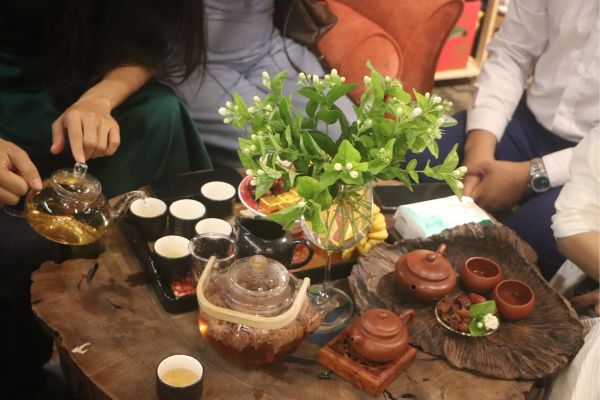
To the casual observer, tea in Vietnam might just seem like a complimentary beverage served alongside a bowl of Phở. But to a true Hanoian, every cup of tea holds a universe of etiquette, philosophy, and historical depth. Hanoi tea culture is not a single, rigid tradition. It is a fascinating spectrum – ranging from the incredibly meticulous, aristocratic art of scenting tea with lotus blossoms, to the raw, unfiltered, and deeply egalitarian world of sidewalk iced tea (trà đá vỉa hè). Here is your definitive guide to understanding the soul of Hanoi through its tea.
The Philosophy of Traditional Hanoi Tea
For centuries, drinking tea in Hanoi was considered a highly elevated and pure pursuit. Unlike alcohol, which is associated with loud banquets and chaotic crowds, tea requires tranquility. As the famous Vietnamese musician Duong Thu once observed, alcohol is for the noisy, but tea is for the peaceful; drinking tea brings three profound joys: the joy of leisure, the joy of deep conversation, and the joy of genuine connection.
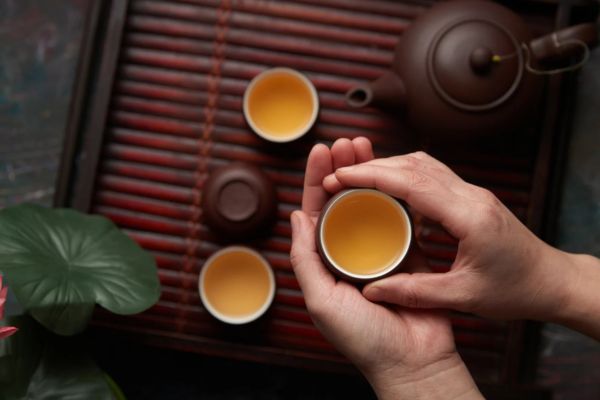
Historically, the traditional Hanoi tea culture belonged to the scholars, the aristocrats, and those who had the time to be “idle” in the most sophisticated sense. True tea masters in Thăng Long (the ancient name for Hanoi) believed that tea was a mirror of one’s personality. The way a person prepared the leaves, heated the water, and held the cup revealed their true character.
Trà Sen: The Pinnacle of Hanoi Tea Culture
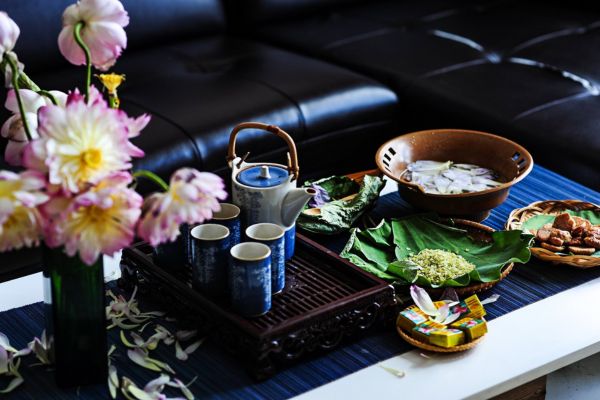
When discussing the height of elegance in Hanoi tea culture, one must immediately speak of Trà Sen (Lotus Tea). This is not the mass-produced, artificially flavored tea you find in supermarkets. Authentic Hanoi Lotus Tea is a masterpiece of culinary craftsmanship, once reserved exclusively for royalty and nobles.
The creation of authentic Trà Sen requires staggering dedication:
-
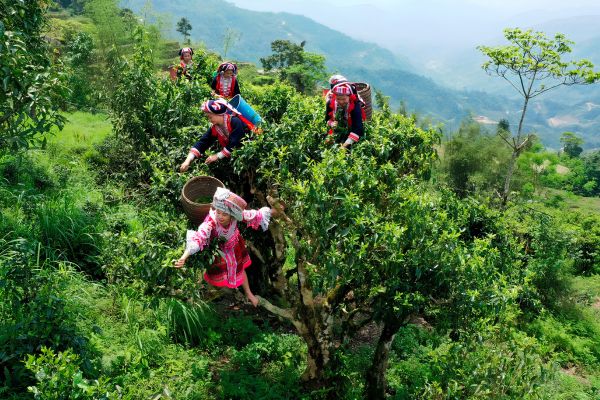
The Rare Leaves: The base tea must be ancient Shan Tuyết tea, harvested from wild trees growing 800 to 1,300 meters high in the misty mountains of Ha Giang. These leaves are pan-fried, dried, and then aged in earthen jars covered with dry banana leaves for 4 to 5 years. This aging process removes the harsh bitterness, leaving the leaves light, porous, and ready to absorb new fragrances.
-
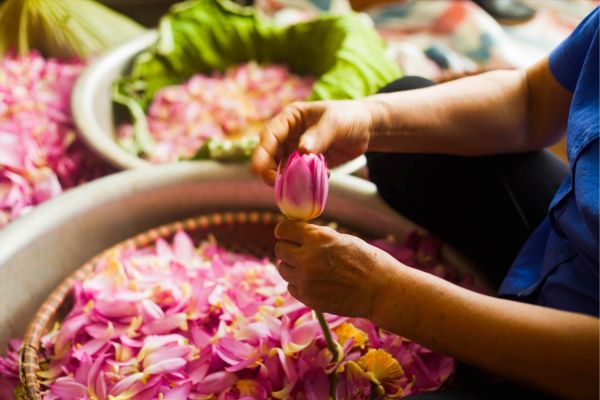
The Thousand Blossoms: To scent just one kilogram of this tea, artisans require between 1,000 and 1,200 perfectly bloomed lotus flowers. Historically, one kilo of this tea cost the equivalent of 2 to 3 maces of pure gold.
-
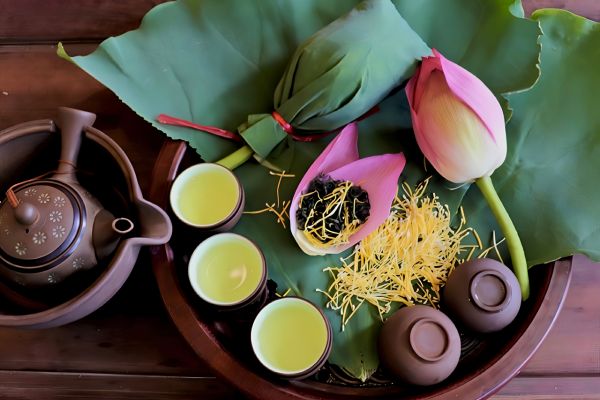
The Meticulous Scenting: Artisans extract the tiny, rice-like white anthers (called gạo sen) from the lotus. They layer the aged tea with these anthers, wrapping them in moisture-proof paper for 18 to 24 hours. The tea is then sifted, dried, and layered with fresh lotus anthers again. This grueling process is repeated up to five times to ensure the tea leaves capture the deep, intoxicating, and lingering soul of the lotus.
The Ritual: Brewing and Tasting Like a Scholar
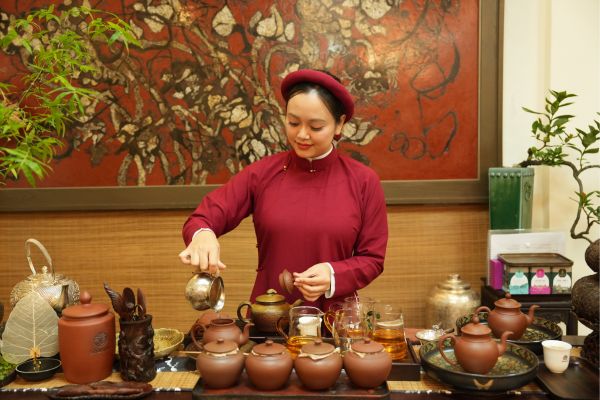
In the high-end spectrum of Hanoi tea culture, brewing is a ceremonial art. Every movement has a poetic name and a practical purpose.
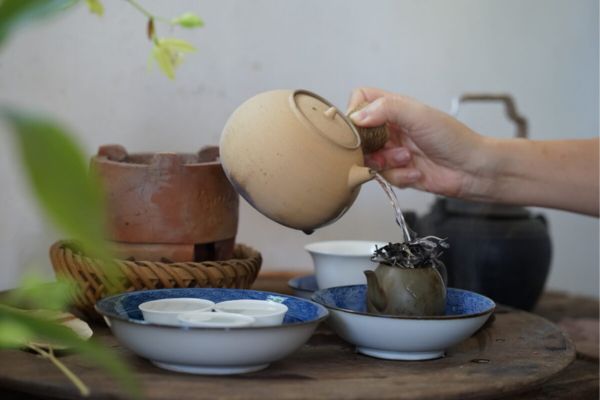
First, the clay teapot and tiny cups must be heated with boiling water. The artisan uses a bamboo or fragrant wood scoop to place the tea into the pot – a move elegantly called Ngọc diệp hồi cung (Jade leaves returning to the palace). Then comes the water. The first pour is called Cao sơn trường thuỷ (High mountain, long water), which is immediately poured out. This “wakes up” the tea leaves and rinses away any dust. The second pour is Hạ sơn nhập thuỷ (Lower mountain, entering water). The boiling water is poured until it overflows the rim, pushing out any floating debris before the lid is sealed. Boiling water is then poured over the closed teapot to trap the heat inside.
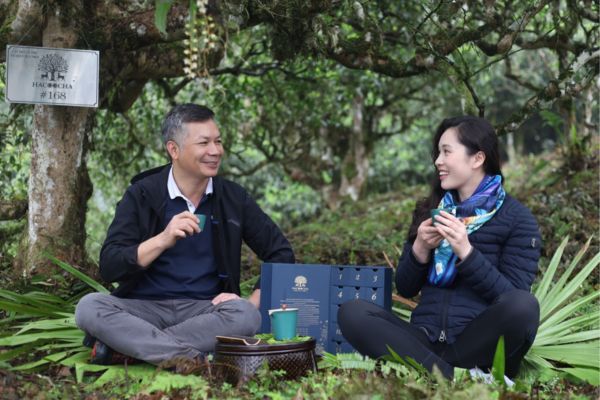
Drinking the tea is equally deliberate. In ancient times, the drinker would pass the cup from the left hand to the right – a gesture known as Du sơn lâm thuỷ. When taking a sip, the drinker holds the cup close, inhaling the aroma first. Traditionally, one would cover their mouth with their wide sleeve while sipping, a sign of utmost politeness and culture. The tea is swallowed slowly, allowing the floral notes to travel up the nasal cavity while the sweet, lingering aftertaste coats the throat.
The Secret Tea Gatherings (Hội Trà)
Hanoi tea culture also features exclusive social gatherings. In the past, scholars held “Spring Tea” gatherings on the morning of the Lunar New Year, sipping premium tea while admiring blooming peach blossoms and white apricots.
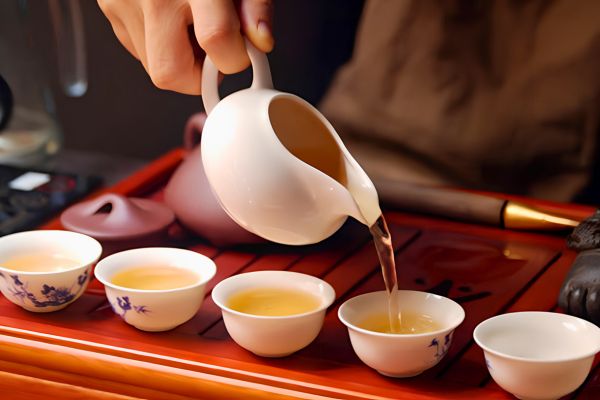
The most fascinating tradition, however, is the Trà Ngũ Hương (Five-Fragrance Tea) gathering. Strictly limited to five people, the host uses a special tray with five depressions. Five different highly fragrant flowers – chrysanthemum, chloranthus, jasmine, lotus, and aglaia – are placed under inverted teacups over boiling water to trap their essence. Plain, high-quality tea is then poured into these scent-infused cups. The guests must blindly drink and guess which flower’s soul is hiding in their cup, rotating the cups until everyone has experienced all five scents.
The Modern Heartbeat: Sidewalk Iced Tea (Trà Đá Vỉa Hè)
If Lotus Tea represents the aristocratic history of the city, then Trà Đá Vỉa Hè (sidewalk iced tea) represents its modern, living, breathing soul. To truly experience Hanoi tea culture today, you must step out of the quiet tearooms and onto the bustling pavements.
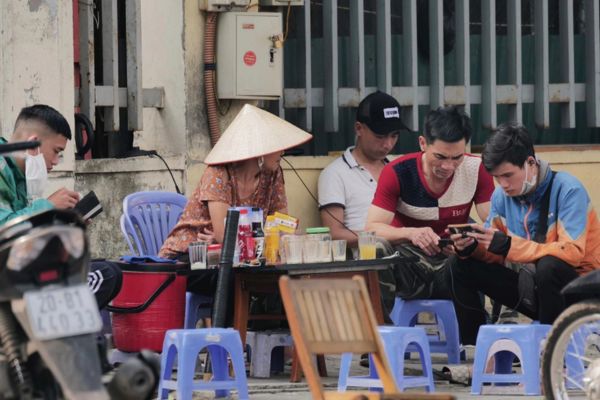
Sidewalk iced tea is the exact opposite of the royal tea ceremony. It is unapologetically simple. You do not need jade cups or a tranquil garden. All you need is a vendor with a cooler box, a plastic pitcher of heavily brewed green tea diluted with ice, a few cheap plastic stools, a plate of sunflower seeds, and a bamboo water pipe (điếu cày).
Yet, this gritty, simplistic setup is the absolute core of daily Hanoi tea culture. The sidewalk tea stall is the city’s ultimate, unfiltered news channel. It is where you will hear debates about global politics, real estate prices, neighborhood gossip, and daily struggles.
The Great Social Equalizer
What makes sidewalk Hanoi tea culture so beautiful is its ability to erase all social boundaries. At a plastic table, there are no rich or poor. You will see a delivery driver taking a 10-minute break next to a group of university students singing songs, sitting right beside a white-collar office worker seeking an escape from their four-walled cubicle.
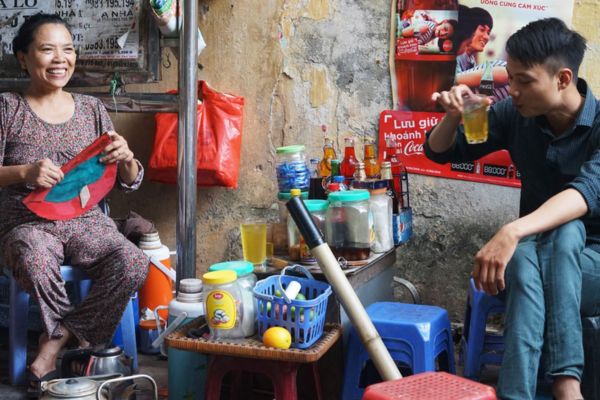
For the youth, trà đá is tied to memories of poor student days, where a cup of tea and a plate of sunflower seeds fueled hours of laughter and dreams. Even as they graduate and become successful professionals, the habit remains unbroken. Whether it is a sweltering summer day calling for a brain-freezing glass of iced tea, or a freezing winter afternoon demanding a cup of hot, bitter green tea to warm the hands, the sidewalk stall is always there.
The Enduring Legacy
Vietnam is one of the top five tea exporters in the world and the cradle of the ancient tea tree. Today, modern milk tea chains and Western coffee shops dominate the commercial streets. But they have not, and will never, replace the true essence of the city.
From the silent, reverent preparation of a 1,000-blossom Lotus Tea to the loud, joyous clinking of ice in a plastic cup on a busy street corner, Hanoi tea culture continues to thrive. It is not just a beverage; it is the way this city breathes, communicates, and connects its glorious past with its chaotic, beautiful present. When you visit Hanoi, sit down, order a cup, and taste the history for yourself.
