
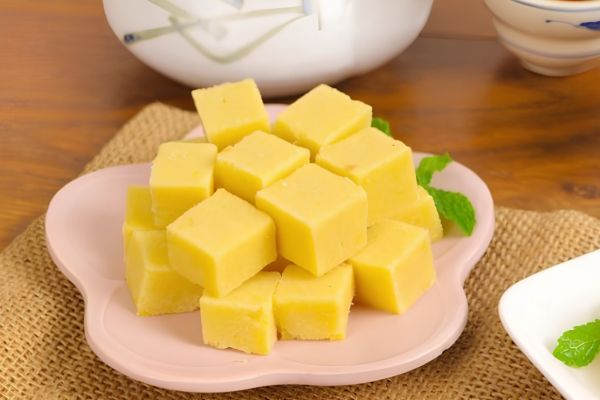
I’ve been guiding travelers through the narrow, chaotic alleys of Hanoi’s Old Quarter since well before 2010. Back then, food tours weren’t a booming commercial industry; it was simply locals sharing our daily meals with curious foreigners. Over the years, I’ve seen culinary trends come and go, but one traditional pastry has remained a constant in every Hanoian household: the mung bean cake (known locally as Bánh Đậu Xanh).
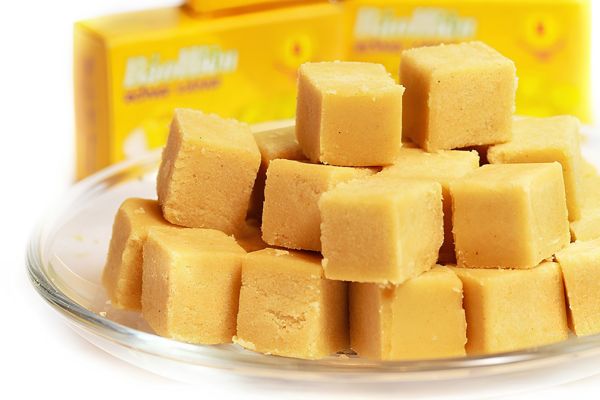
Unlike the flashy, neon-colored desserts you might see trending on social media today, the Vietnamese mung bean cake is visually understated. It is a simple, rustic cube wrapped in cellophane and packed in unpretentious wooden or cardboard boxes. But do not let the humble packaging fool you. This specialty originating from Hai Duong province is a masterclass in traditional Vietnamese pastry-making. In this guide, I will break down exactly what a mung bean cake is, its royal history, how it is crafted, and the correct way to eat it so you don’t look like a tourist.
What Exactly Is a Mung Bean Cake?
At its core, a mung bean cake is a finely milled, pressed pastry made from just a few staple ingredients: pure mung bean powder, refined sugar, vegetable oil (or traditionally, rendered pork fat), and a touch of natural pomelo flower essential oil for fragrance.
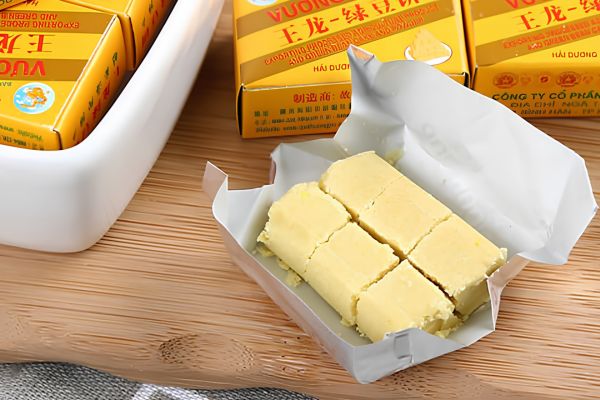
When you unwrap a piece, it looks like a fragile, sandy block. The texture is the defining characteristic of a high-quality mung bean cake. It is incredibly soft, slightly powdery, and designed to melt instantly the moment it touches your tongue. There is no chewing involved. The taste is a delicate balance – sweet, deeply nutty from the roasted beans, and mildly rich from the fats used to bind the powder together.
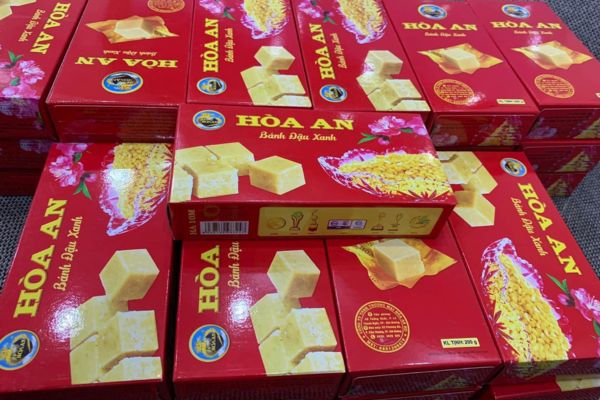
For locals, a box of mung bean cake is not just a snack. It is a cultural staple, often gifted during the Lunar New Year (Tet) or other major holidays to symbolize connection, respect, and affection among family members and friends.
The Royal Legend: A Pastry Fit for an Emperor
The story behind this famous Hai Duong specialty is something I always share with my guests over a cup of hot tea. It dates back to the feudal era of Vietnam. According to local folklore, Emperor Bao Dai – the last emperor of the Nguyen Dynasty – was paying a royal visit to the Hai Duong region.
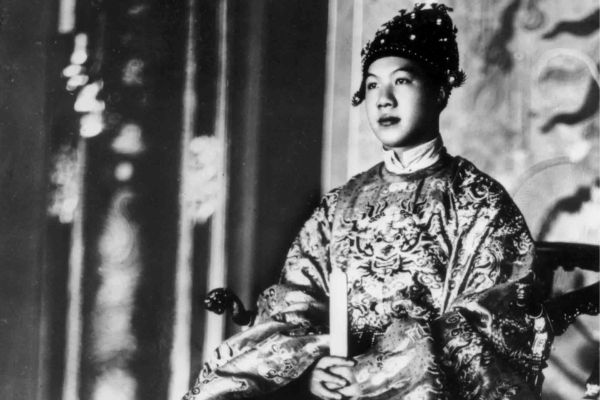
The local residents wanted to offer the Emperor a distinctive dish that showcased their hospitality and regional pride. Instead of hunting for rare, exotic ingredients, they used what they had in abundance: the simple mung bean. The local artisans meticulously selected the finest beans, ground them into an ultra-smooth powder, mixed it with sugar and pure pork fat, and shaped it into elegant, bite-sized cubes.
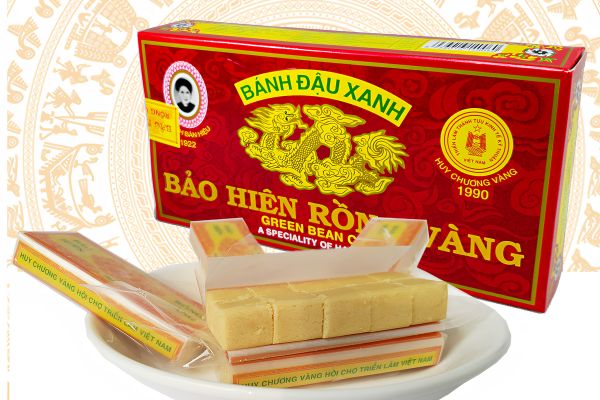
When Emperor Bao Dai tasted the local mung bean cake, he was thoroughly impressed by its refined sweetness and the way it dissolved effortlessly in his mouth. He was so pleased that he issued a royal decree praising the pastry. The decree bore the image of the “Golden Dragon” (Rồng Vàng) – the ultimate symbol of imperial authority. Since that day, the authentic Hai Duong pastry has been officially branded as the Golden Dragon mung bean cake. Today, that name remains a hallmark of quality, distinguishing the genuine product from imitations made in other provinces.
The Meticulous Craftsmanship
You might think that mixing bean powder and sugar is a simple task, but crafting a proper mung bean cake requires serious technical skill and patience. The traditional artisans in Hai Duong still heavily guard their precise ratios and techniques.
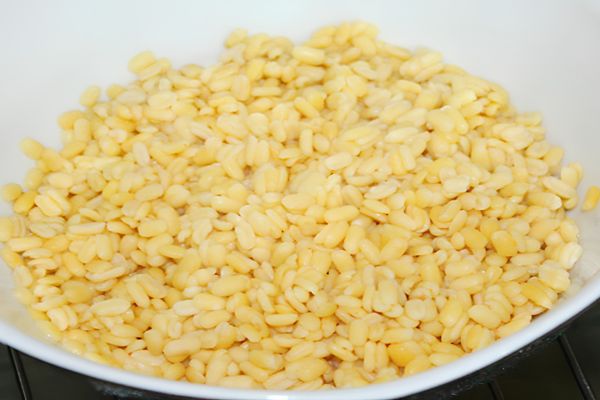
First, the selection of the beans is critical. The makers only use premium, thoroughly dried beans. Any sign of moisture or mold will ruin the entire batch. The beans are roasted until perfectly cooked, then shelled and ground into an incredibly fine powder. This rigorous milling process is what gives the mung bean cake its signature melt-in-the-mouth texture.
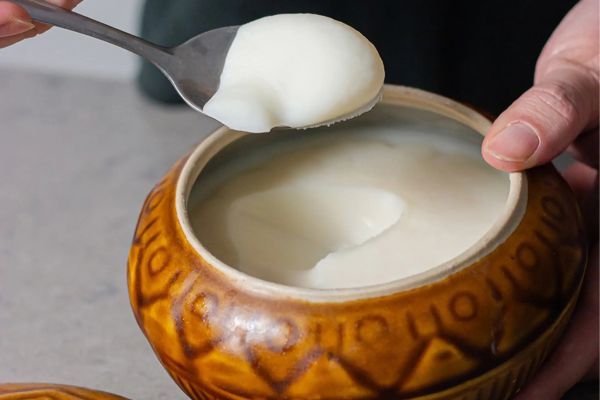
Then comes the fat. While many modern commercial brands use vegetable oil to cater to mass markets, the traditional, authentic recipe relies on rendered pork fat. Preparing the pork fat is a high-stakes step. The artisans must clean the fat, remove the skin, and render it over a low, highly controlled flame. If the fat is rendered too hot or too long, it takes on a burnt smell that easily overpowers the delicate flavor of the beans. If it is rendered too little, the fat won’t provide the necessary richness.
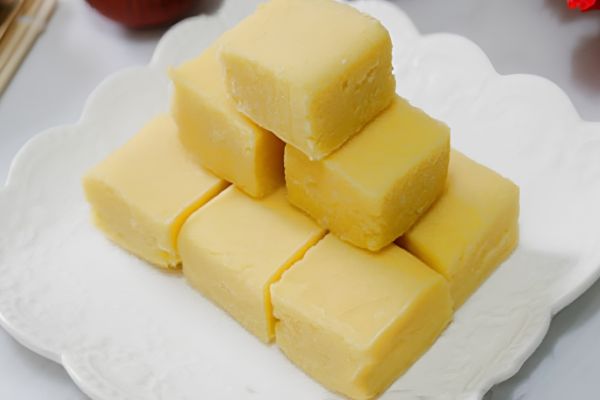
Finally, all the ingredients are folded together, usually with a drop of pomelo flower extract, and pressed tightly into molds. Even the wrapping is done carefully by hand, ensuring the delicate mung bean cake does not crumble before it reaches the consumer.
Health Benefits: The Wisdom of Eastern Medicine
Our local cuisine is heavily influenced by the principles of traditional Eastern medicine, which focuses on balancing the body’s internal energy. The mung bean cake is no exception, and it is highly regarded not just for its taste, but for its functional nutritional value.
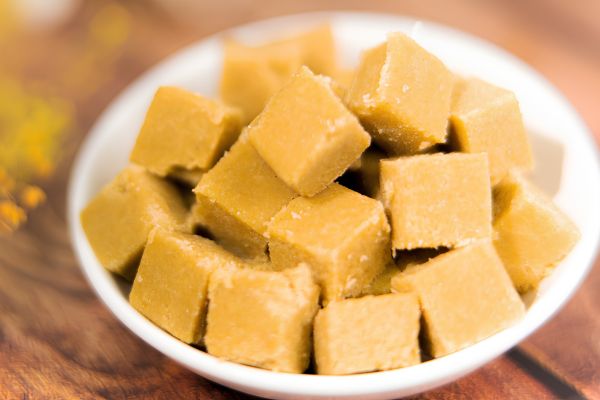
In Eastern medicine, mung beans are considered to have a “cool” and neutral nature. They are widely used to clear heat, detoxify the body, and soothe the digestive system. Because the primary ingredient is pure bean powder, a mung bean cake is naturally rich in nutrients and is highly recommended for people recovering from an illness.
Furthermore, traditional practitioners note that the pure ingredients in a quality mung bean cake can aid in reducing cholesterol and blood fat, acting as a preventative food against conditions like arteriosclerosis in the elderly. This makes it an ideal, healthy gift for older relatives. Whether you are a young child or a senior citizen, the mung bean cake is easily digestible and gentle on the stomach.
How to Eat Mung Bean Cake Like a Local
If you take a whole mung bean cake, pop it into your mouth, and try to chew it while walking down a busy street, you are doing it wrong. It will feel dry and chalky. As a local guide, I always teach my guests the proper ritual.
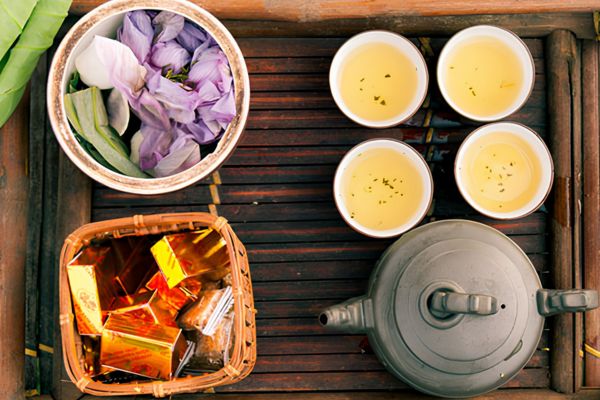
Eating a mung bean cake requires patience. It is an experience meant to force you to slow down. First, you must pair it with a strong, hot cup of traditional Vietnamese green tea, preferably lotus or jasmine scented. The high sugar and fat content of the pastry demands the astringency and slight bitterness of the tea to balance your palate.
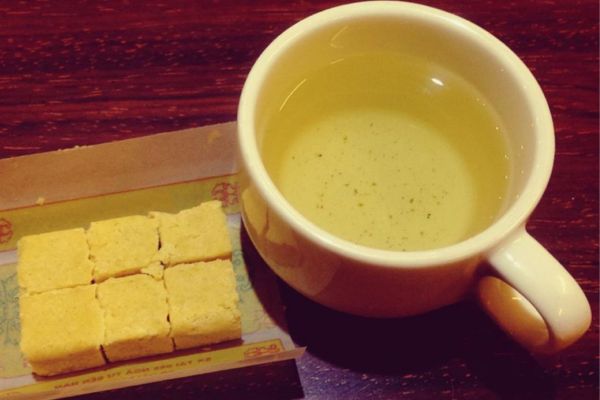
Take a tiny bite of the mung bean cake – just a nibble. Let it sit on your tongue and naturally dissolve into a sweet, rich paste. Then, take a small sip of hot, bitter green tea. The hot tea washes over the sweet paste, neutralizing the sugar and leaving a lingering, floral aftertaste. It is a brilliant combination.
This ritual is best enjoyed on a chilly Hanoi winter afternoon. Sitting around a low wooden table with lifelong friends, sipping hot tea, eating a mung bean cake, and chatting is a core memory for most Vietnamese people. It bridges the gap between generations; grandparents enjoy the nostalgia and poetry, while the grandkids wait eagerly for their share of the sweets.
Bringing the Golden Dragon Home
For travelers wanting to take a genuine piece of Vietnam back home, I always recommend skipping the generic airport souvenirs and heading to a local market to buy a few boxes of the Golden Dragon mung bean cake. It travels exceptionally well, doesn’t spoil easily, and offers a real taste of Vietnamese history. Just remember: when you serve it to your friends back home, make sure you brew a strong pot of green tea first.
