
I have been leading food tours through the chaotic, vibrant streets of Hanoi since long before 2010. Over the years, I have introduced thousands of travelers to our local cuisine. While Phở and Bánh Mì get most of the international spotlight, there is one humble, everyday street food that instantly wins over anyone who tries it: Banh Bao.
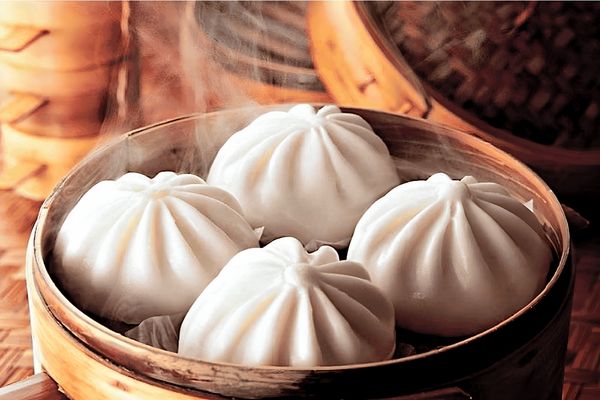
This fluffy Vietnamese steamed bun is a masterclass in convenience, flavor, and culinary evolution. You will see it everywhere – from glass display warmers on street corners to local markets and school gates. Here is everything you need to know about this iconic pastry, straight from a local expert.
The Legendary Origins
While deeply ingrained in Vietnamese culture today, the ancestor of our steamed bun actually originated in China. The story dates back to the Three Kingdoms period and involves the legendary military strategist Zhuge Liang.

According to folklore, Zhuge Liang needed to cross a treacherous, fast-flowing river with his army. The local custom demanded the sacrifice of 50 human heads to appease the river spirits. Refusing to sacrifice any more lives, he ordered his cooks to create a doughy steamed bun shaped like a human head, filled with meat, and threw them into the river instead. These were originally called Mantou (barbarian’s head). Over centuries, this survival ration evolved, traveled south across the border, and was adopted into Vietnamese cuisine as the Banh Bao we know today.
The Vietnamese Twist: What Makes It Different?
While it shares DNA with the Chinese baozi, the Vietnamese steamed bun has been heavily modified to suit our local palate. We don’t just copy recipes; we adapt them.
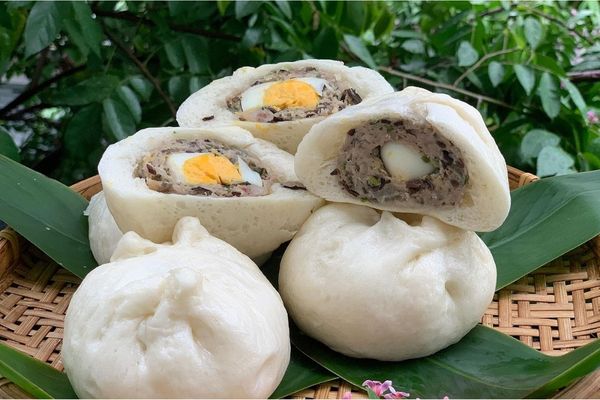
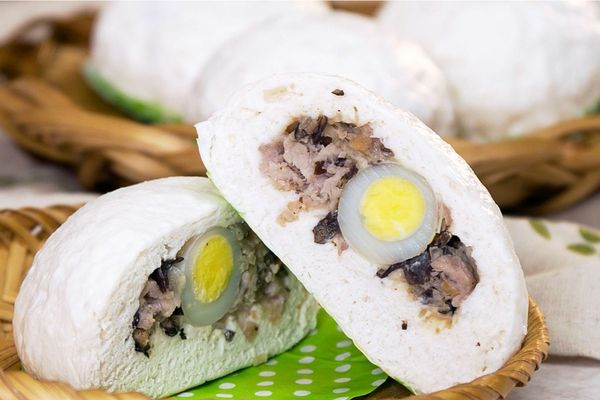
The dough of a Vietnamese steamed bun is incredibly soft, slightly sweet, and bright white. But the real magic happens on the inside. A traditional Banh Bao is generously stuffed with a savory mixture of minced pork, crunchy wood ear mushrooms, glass noodles, and finely chopped shallots. The defining signature of the Vietnamese version, however, is the surprise in the center: a hard-boiled quail egg, or sometimes a piece of salted duck egg. The contrast between the sweet, fluffy exterior and the rich, peppery, savory filling is exactly why locals eat this for breakfast, lunch, or a late-night snack.
A Symbol of Daily Life
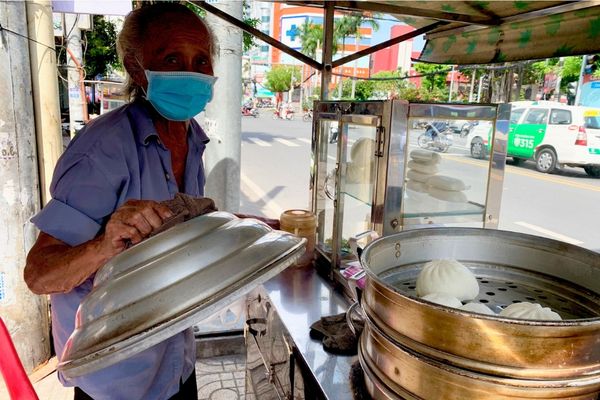
For the working class and students of Vietnam, this steamed bun is the ultimate fast food. It is nutritious, incredibly filling, and designed to be eaten on the go.
It also carries spiritual significance. Because of its round, full shape, the steamed bun is often used as an offering on family altars during festivals and Lunar New Year rituals. It symbolizes completeness, prosperity, and a full life.
Modern Variations of the Steamed Bun
Vietnamese culinary creativity never stands still. While the traditional pork and quail egg version remains the king of the streets, several exciting variations of the steamed bun have become incredibly popular:
-
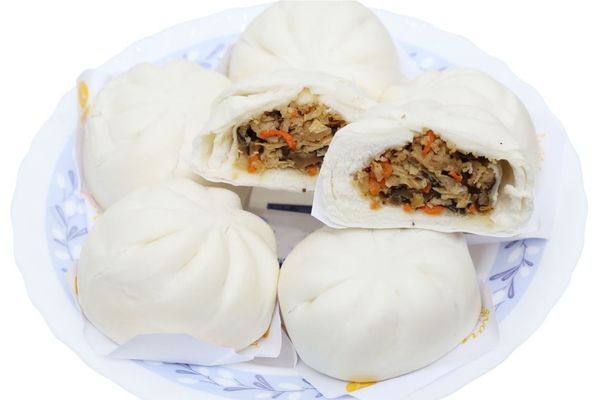
Banh Bao Chay (Vegetarian): Filled with tofu, vegetables, and mushrooms, or sometimes just plain sweet dough. This steamed bun is a staple on Buddhist fasting days (the 1st and 15th of the lunar month).
-
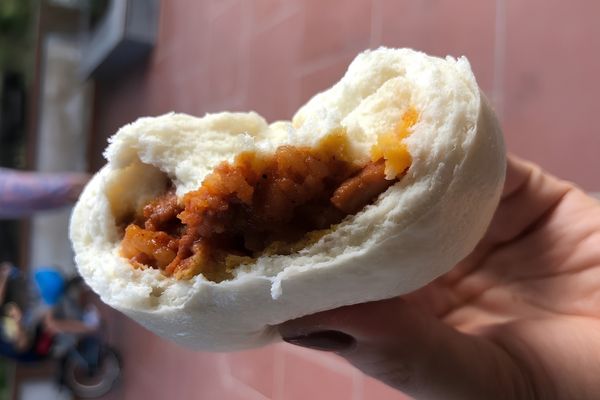
Banh Bao Xa Xiu (BBQ Pork): Filled with rich, sweet, and savory roasted pork, offering a heavier, deeply flavored alternative.
-
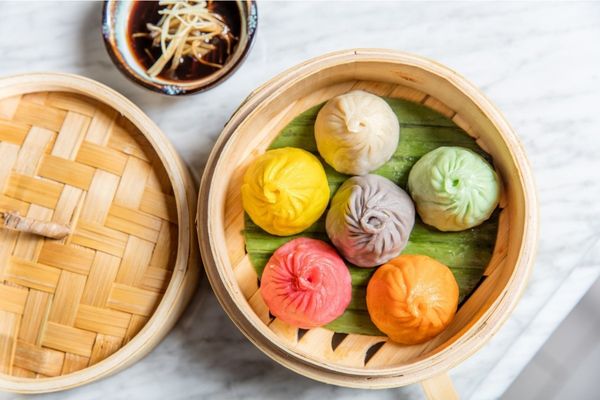
Banh Bao Ngu Sac (Five Colors): A visually stunning steamed bun where the dough is naturally colored using pandan leaves (green), beetroot (red), or gac fruit (orange).
-
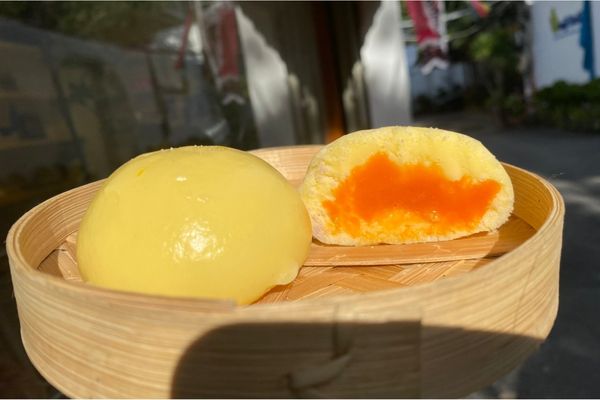
Banh Bao Lava: A massive hit among the younger generation. Break this steamed bun open, and a rich, molten salted-egg custard spills out.
Recognized by Lonely Planet
You don’t just have to take my word for it. The global travel authority Lonely Planet actually listed this specific pastry at the very top of their Eat Vietnam street food guide.
They recognized the Vietnamese steamed bun as a must-try culinary experience, praising its savory pork, mushroom, and egg filling. They also offered one highly practical piece of advice that I always have to remind my foreign guests about: do not forget to peel off the small square of paper at the bottom of the bun before taking a bite!
How to Eat It Like a Local
Eating a steamed bun requires zero pretensions. You don’t need a plate, and you certainly don’t need utensils. Just grab it hot straight from the steamer, peel the paper off the bottom, and eat it with your hands. Pair it with a cup of hot soy milk in the winter or a glass of iced tea in the summer, and you have just experienced one of the most authentic, everyday meals in Vietnam.
